October 30, 2026
Why a Neighborhood Pizza Restaurant Feels Like Home
By @messiahtxjq379
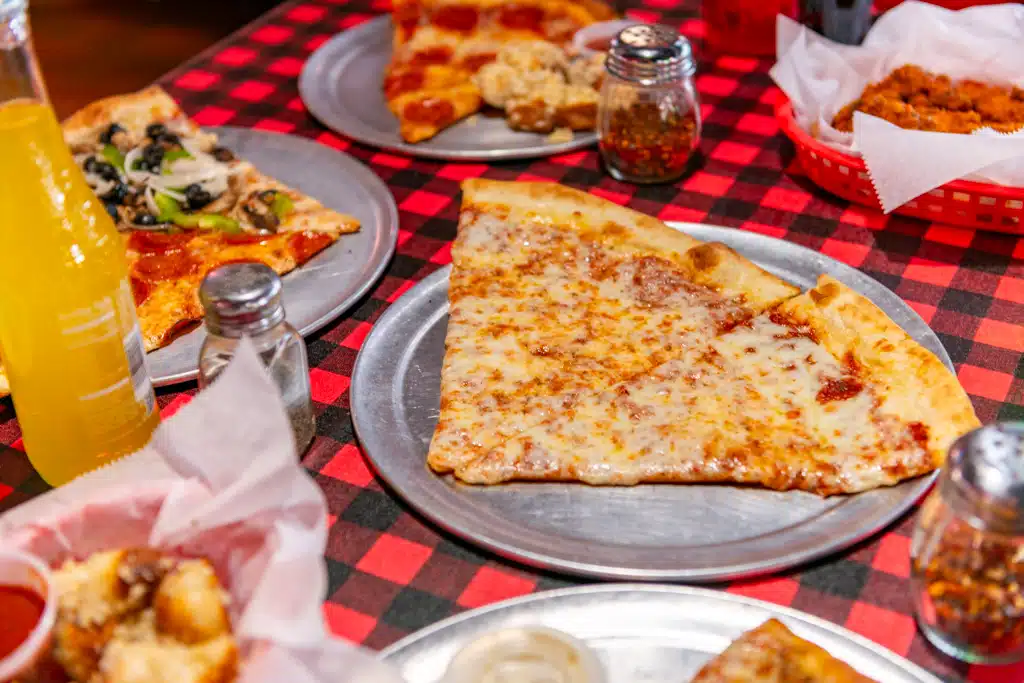

There are restaurants that feed you, and then there are places that seem to absorb you into the life of a block. A neighborhood pizza restaurant often belongs to the second category. It is not simply a business that sells dinner. It is a place where routines settle in, where names stick, where children grow tall enough to see over the counter, and where the person stretching dough on a Tuesday night has watched half the street move in, marry, have kids, and come back years later with those same kids in tow.
That feeling of home is difficult to fake. Chains spend enormous sums trying to design “warmth” into their dining rooms, but warmth is not a paint color or a playlist. It comes from repetition, memory, and trust. It grows slowly. A true neighborhood pizza restaurant earns its place through hundreds of small interactions that most people barely notice at the time. The owner remembers that Mr. Russo likes his pie well done. The cashier asks whether your daughter still wants extra olives on just one side. Someone in the kitchen recognizes your voice on the phone before you finish saying your order. Those details do more than create convenience. They create belonging.
Pizza, of course, is especially suited to this role. It is generous food. It is built to be shared, passed around, argued over, and eaten casually. A bowl of tasting menu foam will never become part of family folklore. A pizza can. People remember Friday night pickup in the rain, cardboard box warming the car seat, the steam that escaped when the lid lifted, the brief debate over who got the last slice. A neighborhood pizza restaurant sits close to that kind of memory, which is why it often feels less like a vendor and more like a familiar room you happen to enter from the street.
The comfort starts before the first bite
People often talk about taste first, and rightly so. If the pizza is bad, sentiment only carries a place so far. But the feeling of home usually begins before anyone eats. It starts with predictability, and predictability is one of the most underrated pleasures in hospitality.
You know the light over the front window. You know the bell that rings when the door opens. You know the way the dining room sounds when it is half full, with sports on one television, low conversation at the booths, and the occasional scrape of a chair on old tile. You know that if you come in around six on a Friday, there will be a cluster of takeout customers near the register and one harried employee calling out names over the noise. Even the wait becomes part of the ritual.
That consistency matters because daily life is not especially consistent. Work changes, rent rises, neighborhoods gentrify, schools shift, and familiar storefronts vanish. Against that instability, the neighborhood pizza restaurant offers a modest but real form of steadiness. Its menu may change a little. Prices certainly do. The faces behind the counter might age. But the core experience remains recognizable. That recognition is soothing in a way people feel immediately, even if they never put it into words.
I have seen this most clearly in places where the décor would never win a design award. The best room in a neighborhood operation is often a little worn. Booth vinyl may show its years. The floor near the oven may have a permanent sheen from decades of traffic. The menu board might be revised with practical tape rather than elegant branding. None of that necessarily detracts from the experience. In many cases it enhances it, because it signals use rather than performance. A room that has served the same families for twenty years carries its own authority.
Familiar faces change the whole equation
A pizza restaurant starts to feel like home when the staff stop interacting with you as a transaction and start engaging you as a known person. That is not a mystical quality. It is labor. It comes from paying attention.
The best neighborhood operators train this attentiveness without making it feel scripted. They notice who eats in and who always takes out. They learn which customers are in a hurry and which want to linger. They recognize the local high school team after a game and understand that those tables need speed, water pitchers, and patience. They can tell when an elderly regular wants conversation and when he wants to sit quietly with a newspaper and two plain slices.
These habits create a kind of social shorthand. The room becomes easier to inhabit because fewer things need explaining. In a strong pizza restaurant, service is often not polished in the fine dining sense, but it is deeply competent in the neighborhood sense. Someone may yell your order across the line rather than whispering it with formality, but they also know exactly how you like it and whether your son is still avoiding mushrooms this month.
That sort of recognition can be powerful, especially in cities and suburbs where loneliness hides in plain sight. Not everyone has a large family nearby. Not everyone lives among old friends. For some people, the pizza place is one of the few settings where they are known without needing to perform. A retired customer who eats lunch there twice a week may not say much, but the nod from the counterman, the usual drink brought without asking, and the small exchange about the weather can anchor an entire afternoon.
The menu speaks a language people understand
Part of what makes a neighborhood pizza restaurant feel home-like is that its menu is usually built around foods people know how to live with. Pizza is democratic. It suits celebrations and ordinary Tuesdays. It can feed one teenager or ten cousins. It can be lunch folded over a paper plate or dinner spread across a table with salad, garlic knots, and a pitcher of soda.
This flexibility matters. Home is not only about warmth. It is about ease. Food that feels domestic tends to remove friction from decision-making. You do not need a seminar to order. You do not need to decode techniques or wonder whether the portion will satisfy a hungry child. Even when a pizza restaurant expands into specialty pies, craft beer, seasonal toppings, or regional styles, its center of gravity remains approachable.
That does not mean every neighborhood place serves the same kind of pizza. Some are thin and crisp, some soft and foldable, some square and heavily sauced, some blistered from very hot ovens. Local preference plays a huge role. In one town, a “regular pie” may mean a larger cheese pizza with restrained sauce. In another, the benchmark might be a chewy Sicilian cut into thick rectangles. The point is not a universal formula. The point is familiarity within a community.
People underestimate how much emotional weight attaches to “our pizza.” Families defend their local style with seriousness because it carries memory. Ask three siblings where they had birthday parties, postgame dinners, or first after-school freedom with a few dollars in their pockets, and a pizza restaurant will often surface quickly. Those memories attach not only to the food but to the specific way the food was made there. Too much char for one person is exactly right for someone who grew up on that block.
Ritual turns a restaurant into part of family life
Many businesses are useful. Few become ritualized. A neighborhood pizza restaurant often does, and ritual is where the feeling of home deepens.
Think about the weekly patterns people build around a local spot. Friday pickup after a long workweek. Sunday slices after church or youth sports. Tuesday dinner when no one has the energy to cook. A half pie shared by two parents after the children go to bed. A booth claimed before the school concert across the street. These routines matter because they reduce the burden of planning and create continuity inside family life.
Over time, these repeated visits become markers. Parents remember the first time their children were old enough to place the order themselves. College students returning home often want two things within the first twenty-four hours: a hug from family and a pie from the neighborhood place. Divorced parents sometimes use a pizza dinner as neutral ground, easy and unthreatening, when life is in transition. Grieving families order trays and pies after wakes because pizza can feed a house full of visitors without ceremony. The same place can hold joy, exhaustion, relief, and sorrow, and hold all of it without asking for explanation.
That capacity to serve life as it is, rather than only life on special occasions, is a major reason the neighborhood pizza restaurant feels intimate. It appears at the edges of countless moments. Few people frame those moments as significant when they happen, yet they add up to a durable emotional map.
The room is social, even when you come alone
Home is not always quiet. In fact, many people define home by a certain kind of manageable noise. The neighborhood pizza restaurant tends to offer that exact frequency of human life.
A good room has motion. Delivery drivers move in and out. Teenagers drift through in packs after school. Parents negotiate toppings with children. Local workers stop by for a late slice. Someone at the end of the counter reads messages between bites. A table in the corner celebrates a birthday with a sheet cake that came from somewhere else because everyone agreed the pizza place handled dinner best.
This social texture makes the restaurant feel communal without being intrusive. You can participate or simply observe. If you https://maps.app.goo.gl/ntzwCaPe4fpT5h2h7 are a regular, you may end up talking to people you never would have met otherwise, the crossing guard, the barber, the school secretary, the contractor remodeling two streets over. These weak ties, as sociologists sometimes call them, help neighborhoods feel livable. They are not deep friendships in every case, but they create a mesh of recognition and civility that strengthens local life.
Independent pizza restaurants are especially good at supporting that mesh because they often occupy a middle ground between public and private space. They are casual enough that no one feels out of place, yet structured enough to give people a reason to gather. Coffee shops can serve a similar function, but pizza restaurants have a different energy. They are louder, more intergenerational, and more forgiving. A child can be a little messy. A team can arrive in uniform. A grandparent can stay after finishing the meal. The room bends to real life.
The owner’s personality is often baked into the place
One reason chain operations struggle to create the same feeling is that they are designed to be transferable. A neighborhood pizza restaurant, by contrast, usually reflects the temperament of the people who run it.
Some places are brisk and no-nonsense, with a fast counter and an owner who seems stern until you notice he quietly comped a slice for a kid short on cash. Some are expansive and boisterous, with owners who work the room, remember anniversaries, and seem to know everyone’s cousin. Some are built around immigrant family traditions, where recipes, work ethic, and hospitality are intertwined. Others are second or third generation businesses that have adapted to a changing neighborhood without severing their roots.
You can feel those personalities in the details. Maybe the kitchen sends out knots with a little extra sauce for regulars. Maybe the owner insists on using a more expensive mozzarella because he cannot tolerate the cheaper one, even though margins would improve. Maybe the music shifts depending on who is working the oven that night. Maybe framed youth team photos line one wall because the restaurant has sponsored local sports for fifteen years.
None of those choices is monumental on its own. Together, they make the restaurant specific. And specificity is essential to the feeling of home. Home is never abstract. It is made of exact things, the scratch on the table, the particular smell of toasted flour and oregano, the owner’s laugh from the back, the faded photo by the register that has somehow stayed there forever.
Pizza restaurants earn trust in practical ways
Sentiment alone does not sustain loyalty. The neighborhood place has to be dependable where it counts. The pizza must be good enough often enough. The order must be right most of the time. The staff must recover gracefully when something goes wrong. Reliability is not glamorous, but it is the foundation beneath all the affection.
In restaurant work, this is harder than customers sometimes realize. Ingredient prices move constantly. Staff turnover can be brutal. Equipment breaks at the worst possible moment. The rush between five-thirty and seven-thirty can turn a kitchen into a pressure chamber. A pizza restaurant that still sends out solid pies through all of that is demonstrating real operational skill.
Customers sense this competence. They know which place can handle a sudden order for six pies after a game runs late. They know which kitchen keeps quality steady on a packed Friday. They know which owner will fix a mistake without argument. That trust builds a deeper attachment than branding ever could.
There is also a financial dimension worth acknowledging. A neighborhood pizza restaurant often occupies a sweet spot between affordability and indulgence. It is not the cheapest way to feed a family, but it usually remains within reach more often than full-service dining. That makes it easier for customers to return regularly, and regular return is how emotional connection forms. If a place is reserved only for rare celebrations, it may feel beloved, but it does not become part of the household rhythm in the same way.
What people miss when the local spot disappears
The easiest way to understand the role of a neighborhood pizza restaurant is to watch what happens when one closes. People do not merely say they liked the food. They talk about a rupture.
They miss the person at the register who knew their order. They miss the room where they ran into neighbors without planning to. They miss the meal that solved dinner without creating new work. They miss the sense that one corner of the neighborhood still belonged to ordinary people rather than investors, algorithms, and real estate pressure. Often, they discover too late that the restaurant had been carrying more emotional and civic weight than anyone admitted while it was open.
I have heard former patrons describe closed pizza places the way people describe old houses. They remember booths, smells, the exact tint of the front windows at dusk. They remember who took them there after Little League and who cried in the parking lot after a breakup. They remember that the owner always stayed open a little late after school plays. This is not nostalgia for commerce. It is nostalgia for a local institution that hosted life.
Not every pizza restaurant creates this feeling
It is worth noting that proximity alone does not make a place feel like home. Some neighborhood pizza restaurants remain purely transactional. The pies are acceptable, the lights are on, and the interactions are forgettable. Other places try too hard to manufacture coziness, which can feel almost more distant than plain efficiency.
The strongest operators understand balance. They protect standards without becoming stiff. They welcome regulars without making newcomers feel excluded. They evolve with changing tastes while preserving the dishes and habits people are attached to. They know, for example, that adding online ordering may be necessary, but eliminating the phone line entirely could alienate older customers who enjoy the human exchange. They may refresh the dining room, but if they sterilize every sign of age, they risk sanding away the texture that made the room lovable.
That judgment is difficult. So is surviving long enough to develop this kind of bond. Rent, labor, delivery app fees, food costs, and shifting consumer habits all challenge independent restaurants. When a neighborhood pizza restaurant still manages to feel rooted after years of those pressures, that rootedness deserves respect. It did not happen by accident.
The feeling of home is built slice by slice
People return to a neighborhood pizza restaurant for many reasons, hunger, convenience, habit, price, nostalgia, quality. Yet the places that truly endure tend to offer something beyond the pie itself. They become familiar terrain. They witness family life, absorb neighborhood change, and provide a setting where people can be ordinary together.
That is what home often is at its best. Not perfection. Not performance. A dependable place where you are recognized, fed well, and allowed to relax into yourself.
A neighborhood pizza restaurant creates that feeling through accumulation. A thousand ordinary nights. A thousand boxes carried out the door. A thousand small acts of memory and competence. The child who once needed help reaching the napkins grows up and brings back her own children. The owner gets older. The menu board changes a little. The oven keeps burning hot. Outside, the block may transform beyond recognition. Inside, the room still smells like dough, cheese, and time well spent.
For many people, that is close enough to home to count as the real thing.
❧